In its latest , AMD had good news for investors and fans of Radeon graphics cards. Gaming revenue was up 73% compared to this time last year, and no small part of w69 slot ทางเข้า this has been down to the success of the RX 9000-series of graphics cards. So much so, that in an , AMD's CEO Dr Lisa Su confirmed that demand was "very strong" and "outpaced supply."
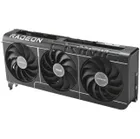
Of course, anyone who has tried to find a at MSRP will already know this, because they're all wildly over AMD's suggested price. It perhaps doesn't help that Team Red only has three RDNA 4-powered cards that gamers are interested in: the aforementioned 9070 XT, the slightly slower 9070, and the .

Truth be told, though, no matter how many RX 9000 cards AMD has sold, the bulk of the gaming division's income will come from consoles. The , , , and Xbox Series S all sport a custom AMD processor.
Sony and Microsoft are both retaining AMD's services for their next generation of consoles, so even though console unit sales are w69 เข้าสู่ระบบ declining (as they're nearing the end of their lifecycles), money will still be coming in from R&D payments.
That's good news for the future of Radeon GPUs, as to develop , the first version of AMD's upscaling and frame generation tech to directly use AI. As this relationship continues, the fruits of the collaboration will roll out to PCs, both for discrete graphics cards and for the APUs that power laptops and handheld gaming devices.
Now, if AMD can just sort out its supply chain and perhaps knock a little off the price tag while it's at it, perhaps more of us can enjoy a Radeon-powered gaming session or two. Because there are plenty of PC gamers who certainly want to, that's for sure.
👉👈
1. Best overall:
2. Best value:
3. Best budget:
4. Best mid-range:
5. Best high-end: